

How Two Small Streams Can Have a Big Impact
By Tanner Yurk, Conservation Programs Manager
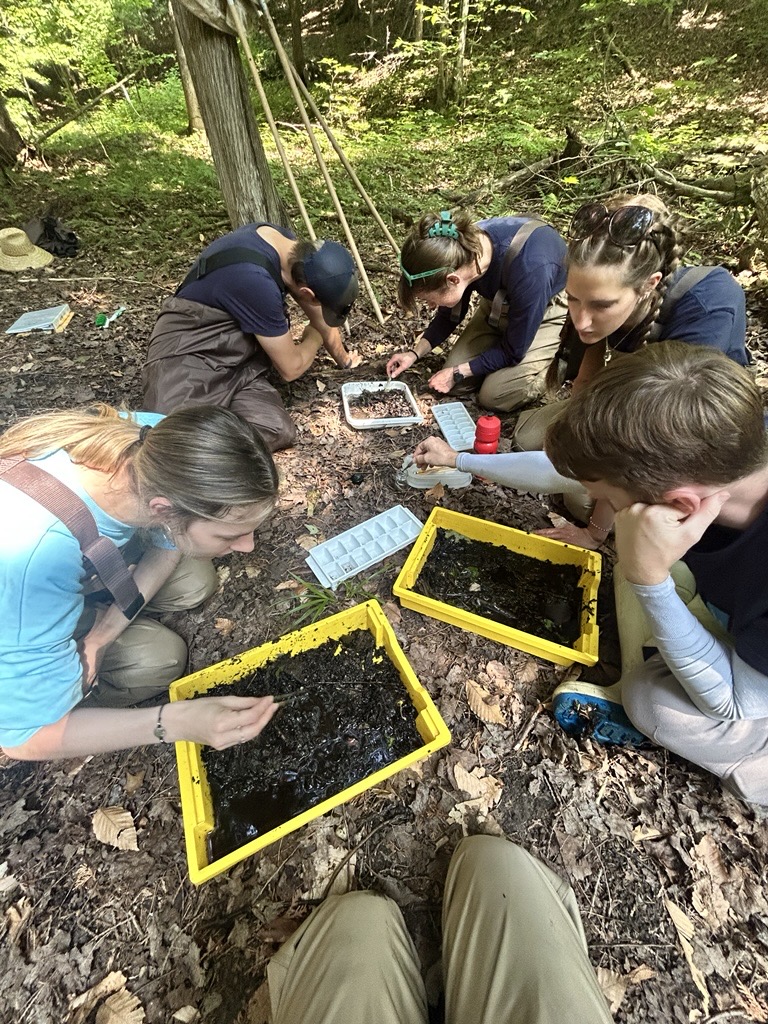
Stream monitoring is one of the most practical tools we have for keeping tabs on watershed health. Every spring, summer, and fall, WLAC staff and volunteers head out to Walloon’s two tributaries to collect water samples, find aquatic insects, and log what we find. It’s a reliable way to track conditions over time, but the real value lies in using that data to guide informed, on-the-ground management.
The latest Volunteer Stream Monitoring results for our local tributaries offer a helpful window into how different streams are faring.
At Schoofs Creek, located at Fields Preserve along Resort Pike Rd, the news is encouraging. This tributary flows directly into the main branch of Schoof’s Creek, which empties directly into the tip of the North Arm. Tracked almost every year since 2017, the stream has held a steady course and recently reached a Grade B. While there is still room to support a wider variety of sensitive insects, a stable multi-year trendline shows that the creek’s aquatic habitat is functioning well. Good substrate diversity, stable banks, and adequate woody debris continue to offer solid cover for pollution-sensitive species like mayflies and caddisflies.
Fineout Creek at our Cedar Valley Preserve along M-75 presents a different picture. This stream flows into the South Arm along Shadow Trails. Sampled periodically since 2019, its biological score has gradually dropped, receiving a Grade F in the latest monitoring cycle. That score points to a noticeable decline in overall insect diversity, a heavy dominance of pollution-tolerant species like scuds or midges, and a sudden lack of sensitive macroinvertebrates.
To understand why this shift matters, it helps to look at how macroinvertebrates serve as living indicators of water quality. A single water sample shows conditions for one exact moment in time, but aquatic insects live in the stream bed year-round. Because they cannot easily move away, their presence or absence tells the real story about long-term habitat conditions. When sensitive species drop off, it usually points to underlying pressure from heavy sediment loading, erratic water flows, rising water temperatures, or nutrient inputs.
While Walloon is known for its clear, deep waters, the lake relies heavily on the health of the small streams feeding it. Tributaries like Fineout deliver water straight into the main basin, meaning any upstream challenges can eventually influence shoreline water quality, algae growth, habitat conditions, and overall lake health.
A low grade at Fineout Creek does not mean the stream is lost; it simply signals that it is time to take a closer look.
Volunteer stream monitoring is designed to spot these trends and highlight areas that need extra attention. For Fineout Creek, the next step is moving into detailed diagnostic work. WLAC plans to pair our insect data with physical and chemical sampling by periodically measuring temperature, tracking flow velocity, and collecting targeted nutrient and dissolved oxygen samples. Upstream habitat will also help us pinpoint specific physical drivers, whether that means runoff from agriculture, bank erosion, or a loss of shading tree canopy.
From there, WLAC and our partners at Tip of the Mitt Watershed Council can turn diagnostic data into targeted restoration work that rebuilds instream habitat. Sharing this data ensures our local monitoring feeds directly into broader watershed protection strategies.